


Daniso Horsa Anaerobic Natural
Daniso Horsa Anaerobic Natural
Couldn't load pickup availability
Share

-
Description:
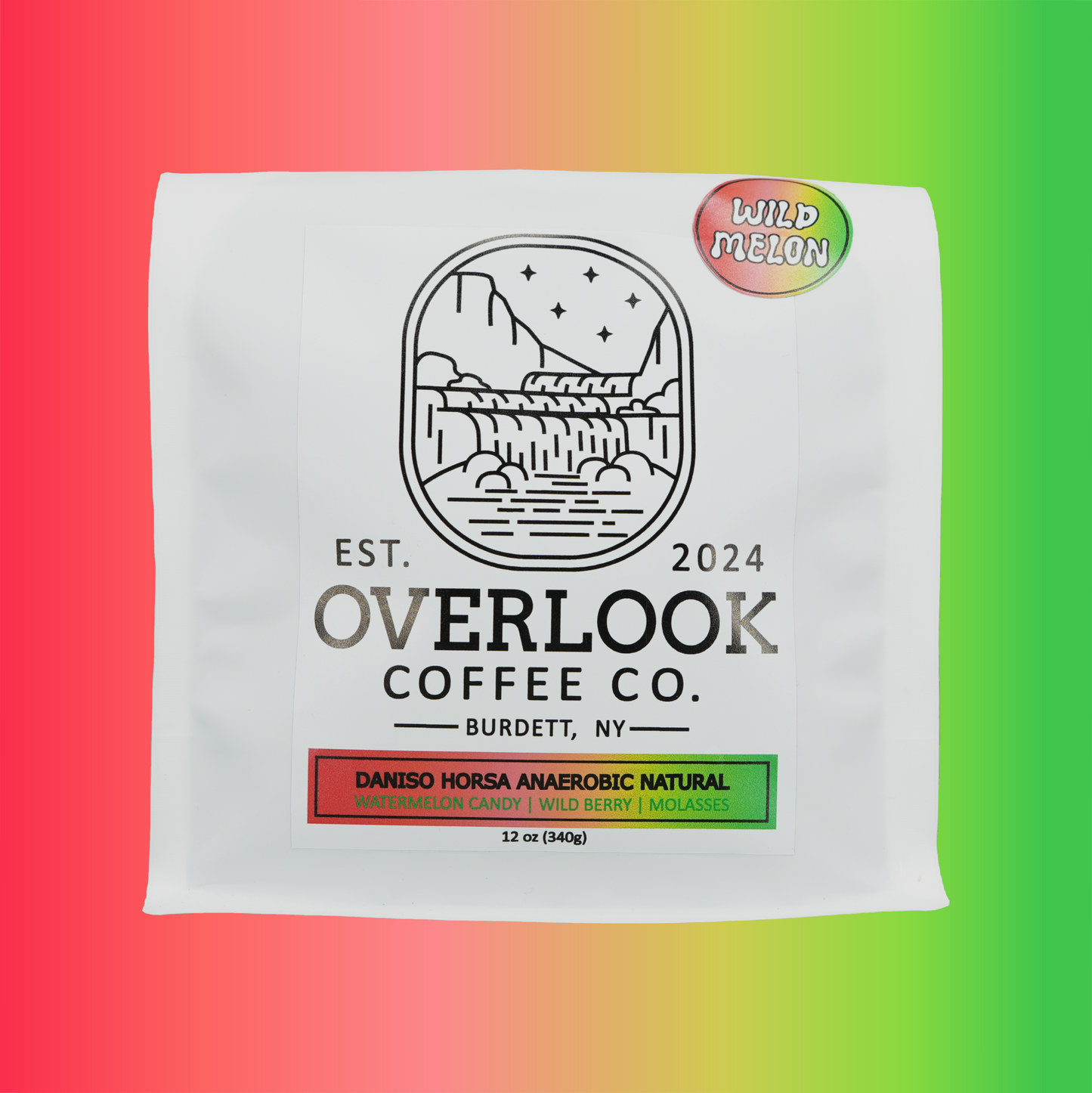
Daniso Horsa produced this lot alongside 300 outgrowers in the Damo area of Shantawene in Sidama, where red earth roads wind through lush hills and daily life hums beneath acacia trees. Ripe cherries are meticulously handpicked and processed as an anaerobic natural, intensifying the fruit character while preserving clarity and structure. In the cup we get watermelon candy up front and juicy wild berries with a sweet molasses finish.
-
Product Info:
Variety: Jarc 74158
JARC 74158 is an Ethiopian Arabica selection developed by the Jimma Agricultural Research Center (JARC) from locally adapted landrace populations. Released in the 1970s as part of Ethiopia’s breeding program, it was selected for improved yield, disease resistance, and cup quality compared to traditional heirloom coffees. It performs best at high elevations, typically 1,800–2,200+ masl, where slow maturation enhances sweetness and complexity. Cup profiles are often clean and structured with bright acidity and fruit-forward aromatics, though expression varies heavily by terroir and processing.Process: Anaerobic Natural
Anaerobic natural processing begins with whole coffee cherries that are carefully sorted for ripeness and sealed in airtight fermentation tanks to ferment without the presence of oxygen. During this sealed fermentation period, microbial activity transforms the sugars within the intact fruit under controlled conditions before the coffee is removed from the tank. The cherries are then dried intact as whole fruit on raised beds or drying surfaces until reaching proper moisture content for storage and export.Elevation: 2226M
Elevation plays a crucial role in determining the quality and flavor profile of coffee beans. Generally, higher elevations are associated with better quality coffee. As coffee plants grow at higher altitudes, they face cooler temperatures, reduced oxygen levels, and increased exposure to sunlight. These conditions cause the coffee cherries to mature more slowly, allowing them to develop more complex flavors and a higher concentration of sugars.Roast: Light
LightProfile: Watermelon Candy,
Wild Berry,
MolassesA coffee profile, also known as a flavor profile or tasting notes, refers to the unique combination of flavors, aromas, and characteristics present in a particular coffee bean or blend. It encompasses a range of sensory attributes such as acidity, body, sweetness, bitterness, aroma, and aftertaste. Coffee profiles can vary widely depending on factors like the bean's origin, variety, processing method, roast level, and brewing technique.
-
Daniso Horsa is a coffee producer in the picturesque Damo area of
Shantawene, nestled within the Bensa district of Sidama. In this area, many
people belong to the Shantawene Kebena group, with local languages
Sidaamu and Amharic.
A journey to Damo through the lush countryside treats you to a
mesmerizing landscape, where trees blur past, casting alternating patterns
of sunlight and shadow. The earth beneath hardens into ruts of vivid red
mud, while scenes of community life unfold, with the sound of laughter and
the clack of ping pong balls filling the air under the shade of acacia trees,
mingling with the aroma of roasting goat and berberi spices.
While the idyllic setting may romanticize coffee farming, the reality is far
from easy. Growing, picking, and processing coffee is demanding work that
unfolds over long days under the sun and in the rain. It begins with nurturing
the trees and patiently awaiting the transformation of delicate white coffee
blossoms into vibrant red berries. Once ripe, the labor-intensive task of
hand-picking only the ripest cherries commences, requiring meticulous
attention to detail and frequent revisits to the trees. Additionally, Daniso
operates a second farmsite in the Faficho area of Bombe Kebele, further
contributing to the coffee production in the Bensa zone.
Producers in the Bombe region reside in the elevated and verdant valley of
Bombe mountain, surrounded by breathtaking scenery. The coffees from
Bombe consistently impress with their density and rich flavor profiles.
They tend to feature heavy concentrations of smaller screen sizes, primarily
14 and 15, which distinguishes them from the lots from Shantawene and
Keramo. Additionally, there is a slightly higher proportion of the Mikicho
variety in Bombe coffees, identifiable by its larger cherries with distinctive
wavy leaves and elongated, canoe-shaped seeds. Mikicho is closely related
to the renowned Gesha variety, and the Bombe lots are renowned for their
lush tropical fruit notes and delicate floral undertones, which are prominent
in every cup. -